PWInsider’s Mike Johnson reported that a lawsuit was filed by WCW Wrestling promoter Nathaniel Tatha-Nanandji against WWE, TKO Group, 2K Games, and several other 2K companies on December 30, 2025 before the United States District Court for the Western Division of Arkansas, Fayetteville Division.
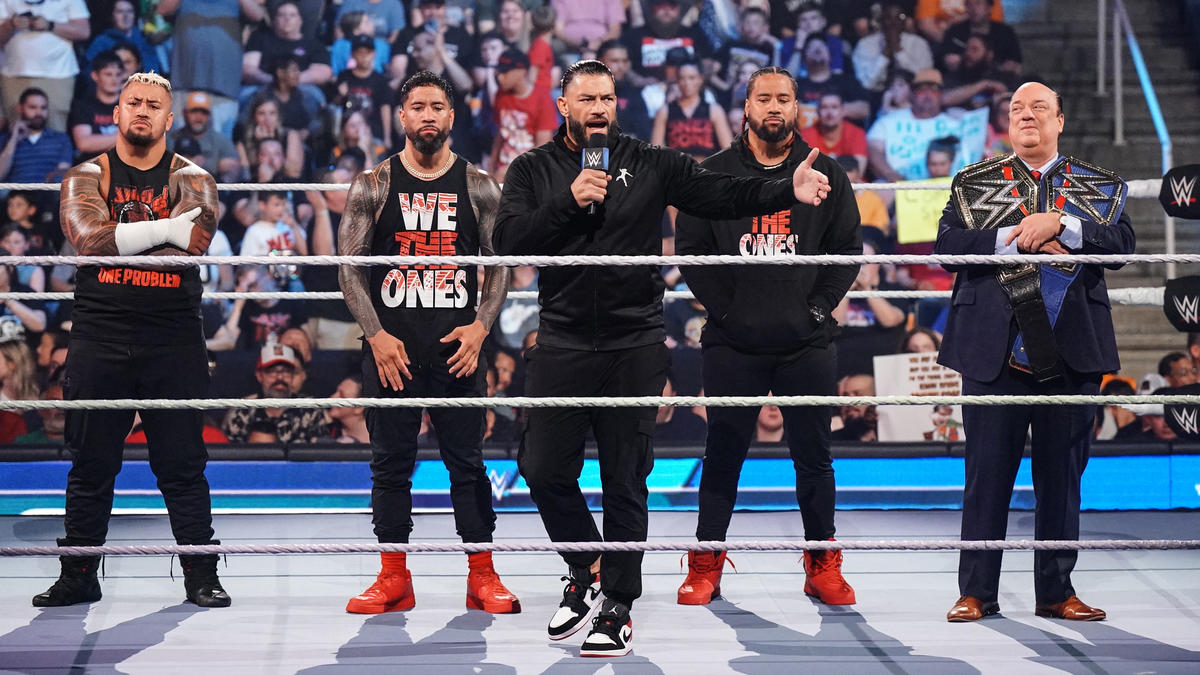
Johnson reported that Tatha-Nanandji is alleging that WWE and 2K Games committed theft of intellectual property used by WWE’s The Bloodline faction.
In the filing, Tatha-Nanandji alleges he “is responsible for the creative direction, booking, staging, filming, and publishing of WCWA’s events and audiovisual content” and that starting around August 2019, he developed a “distinctive, repeatable visual sequence for a faction in WCWA, known as Tier 1.”
a. The entrance, in-ring, or ringside action comes to a deliberate halt, and the Tier 1 members converge into a purposeful, hierarchical formation oriented toward the hard camera or primary broadcast camera, with the formation staged for frontal capture in a locked-off or minimally moving wide or mid-wide shot, ensuring all performers remain fully visible within the frame.
b. The group enters a brief but intentional pause, holding position while the camera framing remains fixed and centered, allowing audience attention to settle on the assembled faction and establishing the formation as a posed visual configuration rather than incidental movement.
c. A designated leader or cueing performer initiates the sequence by raising one arm upward as a visual cue, typically captured in a low-angle medium or medium-close framing that visually elevates the cueing performer within the composition while maintaining contextual visibility of supporting members.
d. Other members follow in staggered but coordinated succession, each raising one arm with a single finger extended, as the camera holds its position or slightly widens to preserve group coherence, allowing the synchronized gesture to complete fully within frame and emphasizing collective participation rather than individual motion.
e. In post-beatdown or domination contexts, the camera remains deliberately positioned, most commonly in a locked-off or minimally adjusted wide or mid-wide frontal angle from ringside or hard-camera orientation, to include the subdued opponent within the same frame as the assembled Tier 1 members. The opponent is visually subordinated within the composition, while the faction occupies the dominant, upright portion of the frame, ensuring that hierarchy, submission, and control are conveyed through spatial and camera-based composition rather than motion.
f. The sequence culminates in a sustained, static, camera-facing tableau, commonly framed symmetrically and held for a perceptible duration without camera movement, functioning as a recurring visual punctuation mark that conveys hierarchy, loyalty, submission, and collective authority, among related expressions of unified control, before the sequence is released and the scene transitions.
Johnson reported that Tatha-Nanadji created the sequence in April of 2019 and has never abandoned the sequence event during times of “restructuring consistent with independent wrestling promotions.” Tatha-Nanandji reportedly also listed two different videos from WCWA events that were copyrighted by the United States Copyright Office in September of 2025.
In the filing, Tatha-Nanandji alleges that an independent professional wrestler who performed for WCWA and later appeared on WWE Smackdown had ssked for WCWA footage that WWE scouting personnel could use “for review.” Tatha-Nanandji stated he oversaw the preparation of the material and provided it to the wrestler and claimed that within “weeks” the sequence he created for WCWA was now being used on WWE programming. Tatha-Nanandji also claimed that a WWE “employee” had attended a WCWA event in March of 2019 and maintained contact with him through 2021.
Tatha-Nanandji claimed “Through these direct and indirect channels, including internal scouting review and publicly accessible WCWA content on platforms such as Facebook and YouTube, WWE and its affiliates had a reasonable opportunity to view, study, and copy the Tier 1 Audiovisual Sequence prior to and during Defendants’ development and exploitation of substantially similar audiovisual content.”
Tatha-Nanndji claimed that WWE used this sequence for the creation and narrative of The Bloodline faction in their company.
“On information and belief, beginning in or around September 2021, after Plaintiff had created and publicly used the Tier 1 Audiovisual Sequence, WWE introduced a visually and narratively similar ritualized audiovisual sequence for its “Bloodline” faction (the “Bloodline Sequence”).
As deployed in WWE programming, the Bloodline Sequence consists of a coordinated audiovisual progression that includes, in combination:
a. Bloodline members aligning together in a deliberate, hierarchical formation oriented toward the primary broadcast camera;
b. A brief, intentional timing pause during which the formation is held;
c. A lead cue initiated by a designated member, followed by staggered but synchronized arm raises by the remaining members, each extending a single finger upward; and
d. A sustained, static, camera-facing tableau functioning as the climactic moment of acknowledgment within the segment.”
In the filing, WWE’s “narrative framework” for their sequence is alleged to be “a narrative function comparable to that performed by WCWA’s Tier1 Audiovisual Sequence.” Photos of each version was given as evidence of their case and breaks down camera shots and “temporal architecture” that are “substantially similar” between the two.
In regards to 2K Games, the lawsuit claimed that WWE had “licensed” the sequence to 2K Games for their WWE 2K video games series for the last several years.
Tatha-Nanandji has demanded a jury trial and is “seeking a declaration that the defendants have infringed on his copyrights from the WCWA material, a permanent injunction preventing them from continuing to do so – and to prevent the use of any footage featuring that material, the disablement of that allegedly infringing material from WWE 2K’s video game properties, damages and any profits the defendants created by use of the allegedly infringing material proven at trial, an order requiring defendants to provide full accounting and records of revenue and profits made from the allegedly infringing material, the destruction of all allegedly infringing material, attorney’s fees, a declaration that the defendant’s “use of the Bloodline sequence and related audiovisual configurations” infringes on the plaintiffs’ ownership and constitutes unfair competition, and an order requiring corrective advertising to dispel any confusion between the two works” and other requests.
Johnson reported that the defendants have been served of the lawsuit based on court records as of Monday, January 5th.
 WWE Reportedly Looking to Lower Ticket Prices for Shows Through This Summer
 Pat McAfee & Randy Orton vs. Cody Rhodes & Jelly Roll Match Reportedly Planned for WWE Backlash 2026
 WWE: Pat McAfee To Appear at 4/10 WWE SmackDown Show, Three New Dates Added to WWE’s Summer 2026 European Tour, Backstage Update on WWE Planning to Lower Ticket Prices for Shows Through This Summer